There’s plenty to carry home from a conference: a tote bag, three new contacts and a notebook with contents noticeably less legible after lunch. But we think ideas deserve a little more staying power. That’s where graphic recorder Debbie Wood comes in.
Listening to speakers and panel discussions, Debbie brings the conversation to life as it happens, drawing what’s being explained in real time. Delegates watch the pictures build, photograph the details that resonate and leave with something they can revisit when Monday’s inbox makes its usual demands.
We asked Debbie how she captures a room’s thinking, what happens to the artwork afterwards and what organisers should know before booking.
For someone who’s never seen it, what happens when you’re graphic recording at an event?
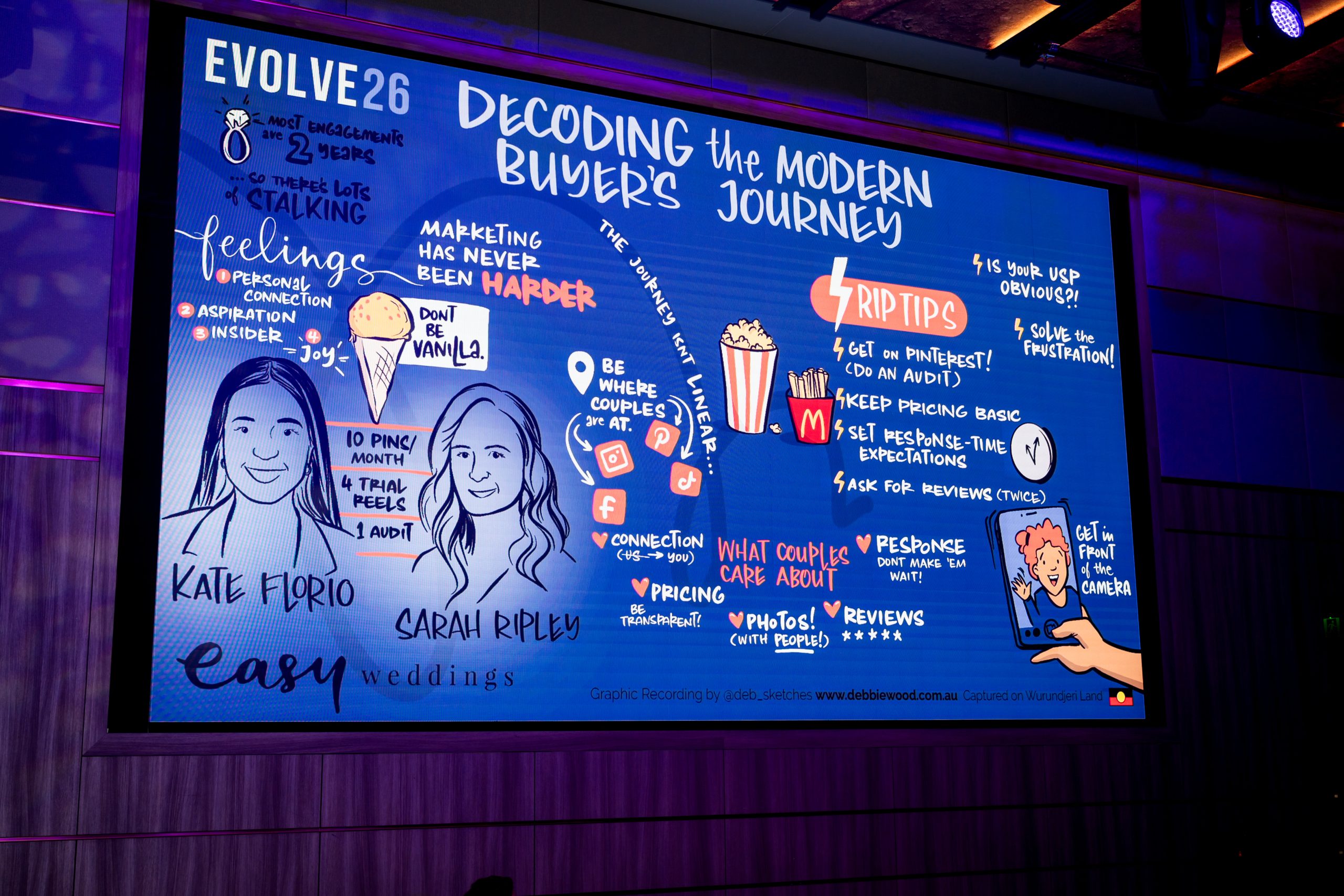
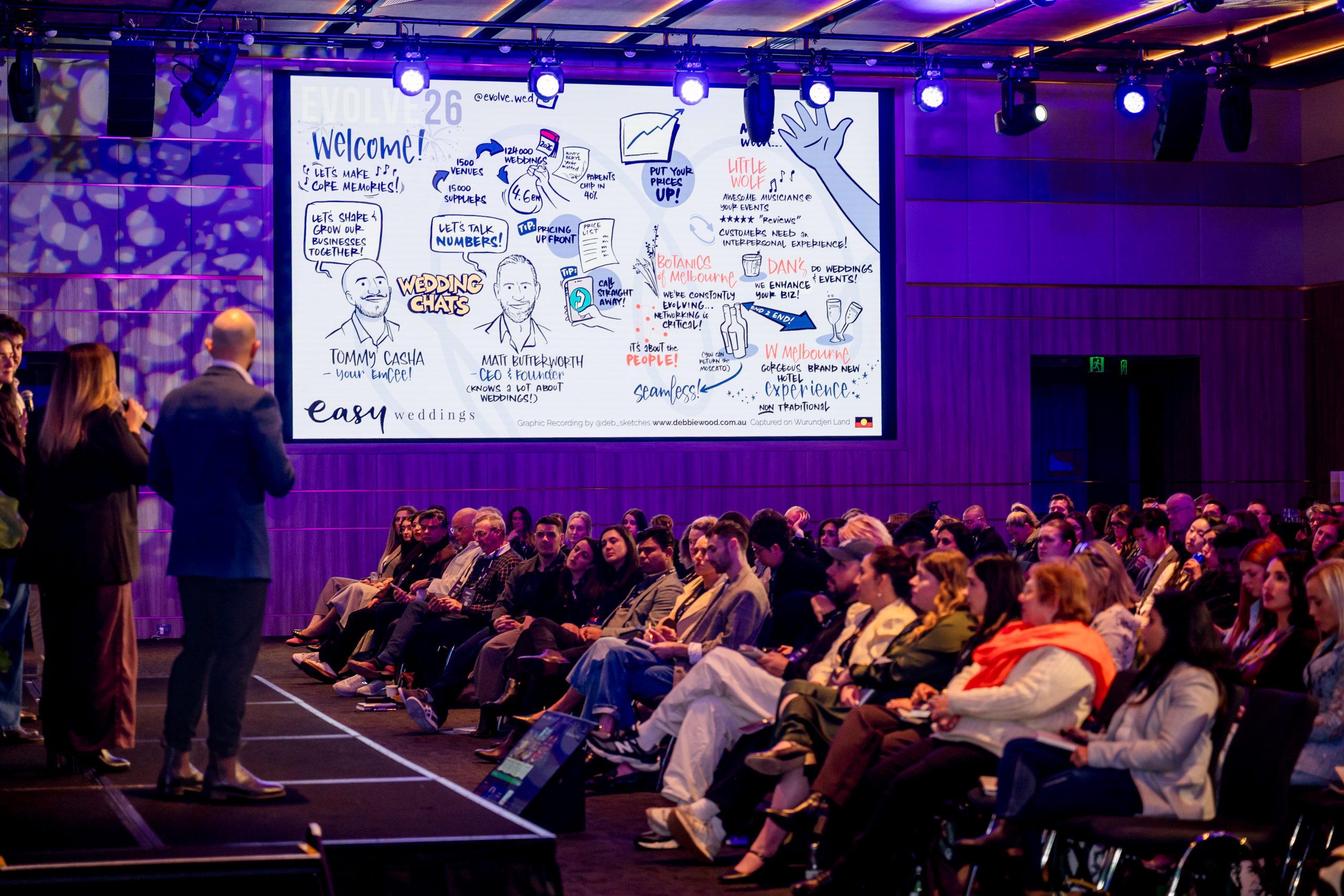
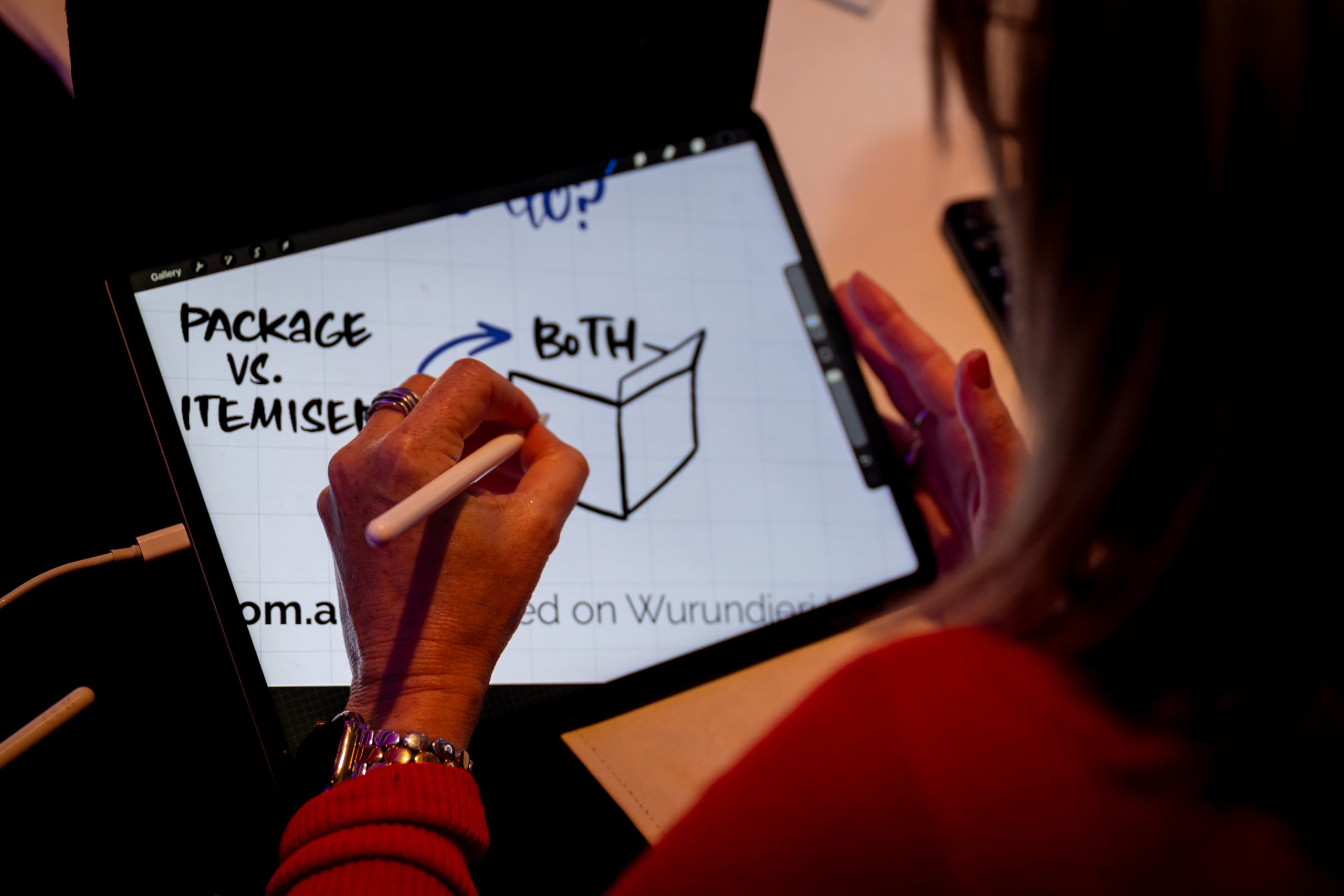
At an event, I’m capturing what I hear using a mixture of words and pictures, creating visual notes for the audience. Most of the time, I’m drawing on my iPad, and I’m connected into the AV in the room. That way, the audience can see the visuals coming to life in real time while they listen.
What are the different ways you work?
I can work digitally on my iPad, which is most common for me these days, or using markers on boards. I can capture the ideas being shared in plenary sessions while speakers are on the stage, or I can capture guest ideas and thoughts outside the sessions, say, out in the foyer or catering area.
I can also create installations of all shapes and sizes out of boards that can be used in a space as part of an interactive mural. That sort of thing becomes a great meeting space where folks gather to look and discuss and add their ideas.
Which of those do planners ask for most, and which one do you wish they knew about?
Most of the time event planners are keen to see the keynotes captured. They’re thinking about post-event artefacts. It’s not until they see the real impact of the work happening live that they truly get what happens for an audience when I’m scribing.
One of my most favourite parts of a conference, and what I think is the most impactful use of a visual scribe, is capturing panel discussions and fireside chats. When there’s no slide decks, and a conversation can go anywhere, for an audience to be watching the conversation visually evolve behind the panel on stage is such a cool thing.
It’s also the most challenging thing in my work, because you really have no idea where a conversation will go. I’ve gotta think on my feet and stay right in the moment.
What do guests do when they notice you working?
When I’m working digitally I’m often tucked away in a part of the room where I can see and hear everything, but folks can’t see me. I always make sure the emcee introduces me to the room at the beginning of the day so they know there’s a real human creating the visual notes!
During any given moment of a conference there’s always someone with their camera out taking pictures of my capture, which I love to see. I love that my notes are going home with everyone in their pockets, living in their photo reels, getting shared in group chats or on LinkedIn. It’s the best kind of conference merchandise because it’s so useful!
What’s the moment at an event when the drawing gets the biggest reaction?
Generally at the end of each session as people head on out to a break, that’s when I notice people lingering, pointing and discussing.
When an event goes for more than one day, as conferences often do, I put together a timelapse video of day one to share at the beginning of day two. It’ll have a snappy backing track and helps to kick off the second day with a bit of reflection, a bit of “look how far we’ve come!”
After every conference I create those timelapse videos which go out to attendees in a follow-up email. When they collectively watch it in the room it’s always pretty cool. It usually gets a round of applause.
Have you had guests ask to take something home or get a copy?
Of course! Folks are always coming up to ask for the digital files, and if it’s appropriate, I love to share. Otherwise the event organisers always get all of the files the following day to share however they please.
What do clients do with the artwork once the event ends?
When it’s a physical artefact it usually ends up back in a company’s HQ in a boardroom or something like that. Another client had their board framed and put up on a wall at their youth centre.
The digital artefacts are often shared on social media and within organisations. They can also be printed at about A3 size so make nice posters for around the office.
Tell me about one event where the reaction stuck with you.
Last year I worked with a colleague to create a six-metre-long engagement wall during a two-day event for the Australian Music Therapy Association.
At the closing of the event we carried the wall up onto the stage to the glorious gasps of 320 attendees. I was over the moon! I am a fan of positive reinforcement.
What do you need from the venue?
For digital work, I arrive an hour earlier to get set up and connect to screens. I need power for a few things, so a powerboard helps! I usually sit at a small table where I can see the stage and hear what I need to from the room.
I can bring my own projector, or connect into an in-house projector or big screen. I also travel with a vision switcher in case the event requires more than one visual input and there’s only one output. That’s been really helpful since I added it to my kit.
What’s the price range, roughly?
For a full-day event my rate is around $3,000 including GST. If I’m interstate, flights and accommodation need to be considered too. My rate for events is all inclusive of prep and post-production, and I supply digital files in PDF, JPG and timelapse MP4 format. The videos are awesome.
A good idea if you’re considering having a visual scribe at your conference or event is to make it one of the sponsorship options! I think sponsors would jump at the chance of having their brand on all of the canvases that folks are taking photos of at an event, because they always do!
The tote bag might end up in the boot, but Debbie’s illustrations have somewhere better to go: into team conversations, onto office walls and back in front of the people putting those ideas into practice.
Her works aren’t just artistic, they’re useful, giving delegates a way to return to the discussion without asking everyone to sit through the same presentation again; and we’re sure it was a great presentation, but just so much better with Debbie’s illustrations to remember it by.
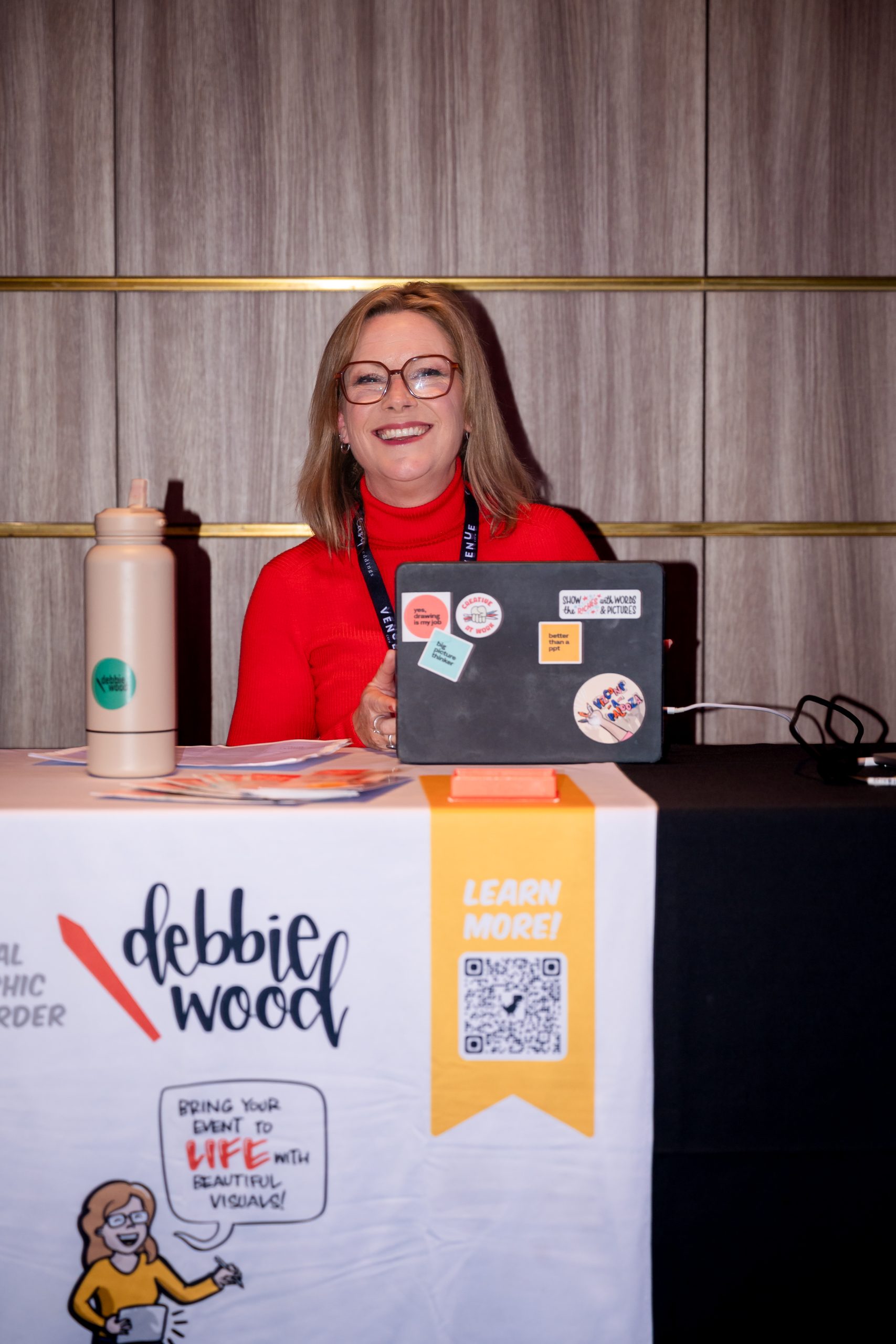
Want your conference ideas to travel past the presentation? Enquire with Debbie Wood today about live illustration for your next event, and give delegates something worth bringing back to work.
Feeling overwhelmed by the venue hunt? Our friendly Venue Specialists are here to help — get in touch with them today.